




Mesure de halos
- Détails
- Publié le mercredi 28 juin 2017 15:32
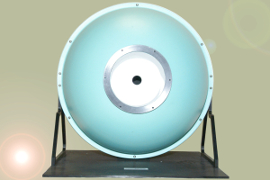
HGH Systèmes Infrarouges, qui a racheté l’américain Electro Optical Industries en 2016, lance le VGI-150, « Veiling Glare Index tester », banc compact de mesure de l’indice de lumière parasite diffuse, un phénomène affectant des systèmes produits en grands volumes telles les caméras d’aide à la conduite. Deux détecteurs déterminent le contraste entre une mire noire et une mire blanche éclairant le système optique. La conception comprend 2 sphères imbriquées, réduisant l'encombrement total à un diamètre inférieur à 0,5 m.
Traversées étanches
- Détails
- Publié le mardi 27 juin 2017 15:32
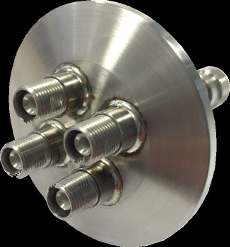
SEDI-ATI, propose un concept de traversées étanches pour fibres optiques reconfigurables. La bride normalisée KF (high vacuum) ou CF (ultra high vacuum), connectable aux deux extrémités aux standards SMA ou FC, peut être reconfigurée au fur et à mesure des besoins. Une bride peut être commandée avec une configuration donnée, par exemple 4 voies FC monomode 1300 nm, puis reconfigurée en changeant le standard de connecteur (du FC au SMA) et le type de fibre (par exemple de la monomode à une multimode 600 µm).
Télescope
- Détails
- Publié le vendredi 23 juin 2017 15:30
Destiné au grand public, Stellina est un télescope innovant développé par la start-up Vaonis. Ultra-compact et simple à utiliser, cet instrument dédié à l'astrophotographie est contrôlé depuis un smartphone. Son système optique fournit l'image principale et le suivi avec un seul objectif, tout en réduisant les dimensions de l'instrument.
Caméras GigE
- Détails
- Publié le lundi 19 juin 2017 15:31
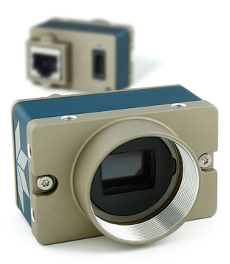 La famille de caméras industrielles GigE Genie Nano de Teledyne DALSA s’enrichit de quatre modèles dotés des capteurs Pregius IMX 255 et IMX 253 de Sony, d’une résolution de 9 (4KHD) ou 12 mégapixels, en version monochrome ou couleur. La technologie TurboDrive accélère le débit de transfert des données à traiter, tout en conservant les avantages du gigabit ethernet. Le framework Trigger to Image Reliability (T2IR) de DALSA améliore la fiabilité du système d’inspection et le protège d’éventuelles pertes de données.
Spectromètre hautes cadences
- Détails
- Publié le vendredi 16 juin 2017 15:31
Ocean Optics lance le spectromètre miniature OCEAN-FX, intégrant un détecteur CMOS haute sensibilité et permettant des fréquences d’acquisition jusqu’à 4500 par seconde, avec une mémoire tampon pour assurer l’intégrité des données. L’OCEAN-FX est destiné aux applications de contrôle des procédés, incluant le tri, la validation en milieu industriel, la détection d’événements transitoires, et le suivi de réactions cinétiques pour la mise au point de médicaments. Présentant une bonne sensibilité dans l’UV, il est disponible avec des fentes interchangeables, et peut garder en mémoire jusqu’à 50 000 spectres.
Mesureur laser
- Détails
- Publié le mercredi 14 juin 2017 15:33
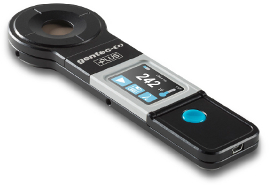
Laser Components propose le mesureur laser de poche PRONTO-250-PLUS de Gentec-Eo, doté d'options de mesure additionnelles : en mode puissance continu (CPM), les puissances laser comprises entre 0,2 et 8 W peuvent être déterminées sans limite de temps, tandis que l'affichage des mesures est rafraichi toutes les 1,5 secondes avec une résolution de 1 mW. Un autre mode nouveau, énergie en mono-coup (SSE) mesure des énergies jusqu'à 25 J avec des impulsions laser jusqu'à 88 ms. Le PRONTO-250-PLUS inclut également le mode traditionnel de puissance mono-coup (SSP) pour des puissances jusqu'à 250 W. Il est livré avec une calibration (YAG) large bande de 248 nm à 2,5 µm et 10,6 µm (CO2), traçable selon les standards du NIST.
Détection synchrone
- Détails
- Publié le vendredi 2 juin 2017 10:27
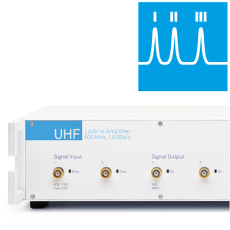
Zurich Instruments propose un générateur de signaux arbitraires (AWG) de 600 MHz avec une option de compteur d'impulsions pour l'enregistrement de pulses aléatoires. Les impulsions d'une durée minimale de 4,44 ns peuvent être comptabilisées sur quatre canaux avec une bande passante de 225 MHz. Le compteur d'impulsions peut être utilisé suivant quatre modes (free-running mode, gated-mode, gated-free-running, et time-tagging mode). L'option pulse counter permet des applications aux mesures de durée de vie de la fluorescence, aux pièges ioniques et au traitement quantique de l'information (correction d'erreur quantique, téléportation quantique).
Filtres passe-haut
- Détails
- Publié le vendredi 2 juin 2017 10:26
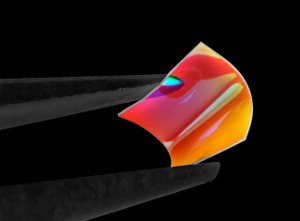
Les filtres polyvalents passe-haut flexibles proposés par Edmund Optics offrent une transmission sur une gamme spectrale de 400–1600 nm, compatible avec une grande variété d'applications. D’une épaisseur de 200 à 500 μm et fabriqués à partir de polymères ultra minces et flexibles, ils sont résistants aux rayures et offrent une longévité équivalente à la plupart des traitements d'oxyde industriels.
Imageur thermique
- Détails
- Publié le vendredi 2 juin 2017 10:26
ULIS lance l’Atto320, premier produit au format 320×240 d'une nouvelle famille d'imageurs au pas pixel de 12 microns. Destiné aux fabricants de solutions thermiques, Atto320 permet d'utiliser des optiques plus compactes et moins onéreuses. Sa fréquence image de 60 Hz permet de visualiser des mouvements rapides, pour les applications de loisirs en plein air, d'observation de la faune ou encore de surveillance.
Ocean Optics élargit son portefeuille de produits
- Détails
- Publié le mardi 16 mai 2017 10:53
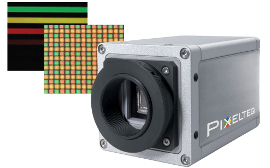
Le spécialiste des applications et produits de spectroscopie modulaire Ocean Optics consolide son offre produits en intégrant à son portefeuille les solutions de détection et d'imagerie multispectrale de Pixelteq. La technologie Pixelteq associe une application de microlithographie et des processus de dépôts, permettant de déposer plusieurs couches diélectriques, métalliques et filtres directement sur les capteurs.
Lighting simulation
- Détails
- Publié le mardi 16 mai 2017 08:00

SPEOS for Solidworks, the brand new integration of SPEOS into a CAD platform, is now available to accompany users in their lighting simulation. The use of the software has been facilitated for non-expert users. This new version also gives Solidworks' users access to the core system of other OPTIS technologies, giving users access to the brand new Optis HPC technology. The new software simulation results are now virtual reality-ready and can be reviewed with any VR helmet and in any virtual reality center.
Optical design software
- Détails
- Publié le lundi 15 mai 2017 08:00
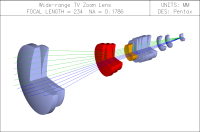
Lambda Research has released OSLO 7, which contains significant updates and enhancements. OSLO 7 includes Windows 10 support, improved Zemax and CodeV import, and STEP export that supports all surface types as well as updated Ohara, Hikari, Hoya, and Schott glass catalogs direct from the manufacturer. In addition to classical lens design features, OSLO (Optics Software for Layout and Optimization) is used to simulate and analyze the performance of optical systems by combining advanced ray tracing, analysis, and optimization methods with compiled macro language.
Ultra-black coating
- Détails
- Publié le vendredi 12 mai 2017 08:00
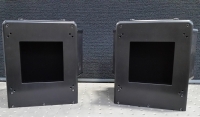
SBIR and Acal BFi announce a new ultra-black surface coating technology that improves infrared emissivity in the midwave-infrared (MWIR) and longwave-infrared (LWIR) spectral wavelengths. In the MWIR (3-5 µm), emissivity is > 99.8% (± 0.1 %); in the LWIR (8-12 µm) emissivity is > 99.5% (± 0.15%). Developed for space-borne imaging applications, Vantablack surface coating material offers exceptional IR absorption and excellent thermal, mechanical and environmental stability. The new material was recently deployed on an Earth-observation satellite.
Femtosecond lasers
- Détails
- Publié le jeudi 11 mai 2017 08:00
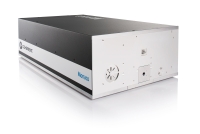
Coherent has extended the performance of their Monaco series of industrial-grade femtosecond lasers by increasing their adjustable pulse repetition rate to a maximum of 50 MHz. A new high energy Monaco provides up to 60 µJ/pulse in the near infrared (1035 nm), or, optionally 30 µJ in the green (517 nm). These improvements provide enhanced performance in precision materials processing applications, particularly for delicate and/or tough materials, and also deliver increased frame rates in demanding multiphoton microscopy imaging applications. All Monaco lasers produce a high quality (M2 < 1.2) beam, enabling tight focusing for high brightness and high spatial resolution. Additionally, the pulsewidth can be user set from under 400 fs to over 10 ps.
Fiber-coupled modulators
- Détails
- Publié le mercredi 10 mai 2017 08:00
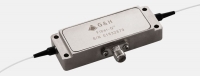
Fiber-Q devices enable high speed optical pulse picking at infrared wavelengths for all-fiber laser systems. They offer high extinction ratio, low insertion loss, and excellent stability in both polarization maintaining (PM) and non-PM formats at modulation frequencies up to 80 MHz for visible and infrared wavelengths. Compact, low-profile package allows integration into all-fiber and OEM systems, including medical laser systems.
Dedicated fs laser
- Détails
- Publié le mardi 9 mai 2017 08:00
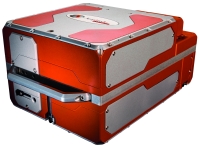
Amplitude extends its industrial femtosecond laser product range with the Yuja, a versatile high energy laser especially designed for quality cutting and drilling of delicate materials. Delivering more than 100 µJ pulse energy, with a flexible repetition rate from 100 kHz to 2 MHz, the Yuja is ideally suited for the high speed drilling of various geometries that require micrometer-range accuracies. Its pulse duration of <500 fs allows for high quality processing of almost all materials with low thermal distortion and minimal heat-affected zones. The Yuja allows optional automated wavelength selection and processing in IR, Green and UV. Other available features include burst-mode operation or a dual output version.
100 W fs laser
- Détails
- Publié le lundi 8 mai 2017 08:00
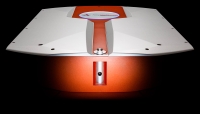
Amplitude introduces Tangor, an industrial femtosecond laser with average output power in excess of 100 W. Tangor produces 400 fs pulses, peak powers greater than 500 MW, single-shot to 2 MHz repetition frequencies, and superior beam quality. By combining a fiber seeded oscillator with a crystal-booster amplifier, Amplitude has produced a hybrid fs laser platform that delivers industry leading average power with high pulse energies. These innovations, combined with high pulse repetition rates, burst mode operation, and pulse synchronization allow for straightforward integration in complex scanning and beam delivery systems. The addition of harmonic generation into the green and ultraviolet allow for processing of a wide range of complex materials.
Triple mirrors
- Détails
- Publié le vendredi 5 mai 2017 08:00
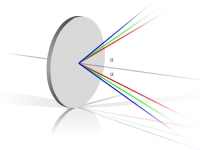
Laser Components developed a new coating process for so-called triple mirrors that makes it possible to apply this complex layer design in one pass. Coatings for three wavelengths used to have to be manufactured in two passes. The new method not only results in higher specifications, but it also has the additional advantage of a shorter duration of production. Furthermore, the new applied coating unit contains more substrates than before, allowing larger amounts to be produced. This positively affects the unit price. Triple mirrors are used, for example, in Nd:YAG laser systems that emit at the fundamental wave-length 1064 nm (IR) and have harmonic waves at 532 nm (green) and 355 nm (UV). Customers can pick their wavelengths individually – many combinations are possible.
APD arrays
- Détails
- Publié le jeudi 4 mai 2017 08:00
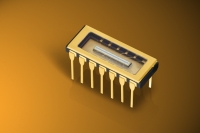
APD-arrays are now available from Laser Components, enabling new applications in LIDAR and ACC, adaptive cruise control. A typical 12-element array will be presented at Laser World of Photonics on June 26–29, 2017 on booth B3.303, and a preliminary datasheet is available now. Arrays will be offered on a custom basis with number and dimension of the individual elements tailored to the specific requirements of each application.
InGaAs camera
- Détails
- Publié le mercredi 3 mai 2017 08:00
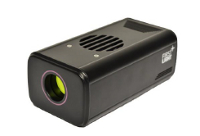
First Light Imaging complete its Infrared range of scientific cameras with C-RED 2, a very compact high-performance InGaAs camera. C-RED 2 outperforms the capacities of its 640 × 512 InGaAs 15 µm pixels high resolution sensor, offering a breakthrough frame rate up to 400 images per second full frame while being ultrasensitive: from 10 to 30 electrons read out noise at full speed. The sensor embeds an electronic shutter with an opening width lower than 1 µs. C-RED 2 is designed for astronomy, bioimaging or industrial applications, in very low light conditions and in any environment.
